
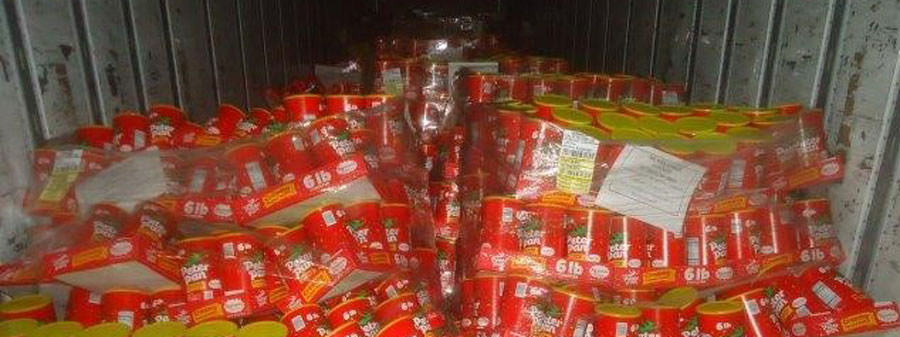
You’ve seen it. Trailer doors open at the dock and instead of tight, clean rows, you’re staring at a leaning mess. Pallets walked, product shifted, maybe a toppled load. The driver shrugs. Someone mutters about road conditions. And the cost of that moment quietly hits your P&L in three or four different places before anyone adds it up.
Pallet shift isn’t bad luck. It’s physics. And physics has a price.
Why Loads Move in the First Place
A loaded trailer in transit is a moving system of forces. Braking, cornering, vibration, and road shock are all working on your freight simultaneously. The question isn’t if your pallets experience those forces. They always do. The question is whether your load is set up to absorb them or surrender to them.
The most common culprit is void space. When pallets are straight-loaded, gaps naturally open between pallet edges and trailer walls. Those gaps give pallets room to “walk.” A few inches of movement per stop compounds over hundreds of miles into meaningful displacement. Once one pallet shifts, energy transfers to the next, and you’ve got a cascade.
Other contributors include mixed height loads where taller pallets have nothing to brace against, inconsistent wrapping tension that lets product shift independent of the pallet, and trailer floors that aren’t swept clean between loads. Debris acts like ball bearings under pallet feet.
None of these are mysteries. They’re mechanical problems with mechanical solutions. But most facilities are still treating them like inevitable losses.
The Real Cost Isn’t Just the Damaged Case
When a load shifts, the visible cost is the damaged product. That’s the number that gets filed as a cargo claim. But it’s the smallest part of what you actually spent.
Here’s what a shifted load really costs:
Cargo claims and rejections. A single DC receiving 800 loads per month reported damage and rejection rates running at 2% before implementing a systematic load securement approach. At that volume, 2% isn’t a rounding error. It’s 16 loads per month, every month, generating claims, rework, and relationship friction with retail partners.
Dunnage spend. The average facility using traditional void-fill dunnage spends around $29 to $33 per trailer load in materials alone. At 40 loads per day across a mid-size facility, that’s over $429,000 per year in dunnage. Not labor. Just materials.
Labor. Installing and removing traditional dunnage averages 20 minutes of additional load time per trailer. One case we tracked granularly: 5 airbags at 1.5 minutes each, 13 pieces of cardboard at 30 seconds each, sticky feet and 2x4s adding another 6 minutes. Twenty minutes of pure dunnage handling per load. That labor cost is real, it’s recurring, and it’s invisible on most P&Ls because it’s baked into headcount.
Disposal. One club wholesaler depot tracked dunnage disposal costs at $83,333 per month. Per month. Dunnage doesn’t disappear. It must go somewhere, and someone pays for that.
Retailer relationship cost. This one doesn’t show up in any spreadsheet. But a Director of Warehouse Operations at Conagra put it plainly after addressing their load quality issues: “Big win for us getting the linkage to load quality and relationship lift.” Load consistency is a vendor scorecard metric at major retailers. Repeated shifts and rejections don’t just cost you claims. They cost you standing.
The Math Most Facilities Haven’t Done
A single mid-size facility running 40 loads per day, 7 days a week, with average dunnage cost of $29.82 per load and average load time of 1 hour 45 minutes is spending $2,592.80 per day on dunnage and dunnage-related labor. That’s before a single claim is filed.
Across 12 facilities? That’s $4.1 million in annual expenditure on a problem that’s largely preventable.
The fix isn’t more dunnage. More dunnage is just more of the same variable. More spend, more labor, more disposal, and still a load that can shift if a bag bursts or a bar shifts position.
The fix is eliminating the void. When pallets are loaded tight, bricked, seams covered, pallet-on-pallet contact maintained, and mechanically restrained from walking, the energy from braking and road shock has nowhere to go except straight into the load system. Product stays put. Claims drop. Labor comes down.
One facility that moved to this approach saw dry load tipping rates fall from a peak of 10.6% in July to 0.3% by April of the following year. Chilled loads, which were already better controlled, stayed consistently under 1% throughout.
That’s not just a testimonial. That’s a trendline.
What This Means for Your Operation
If you haven’t looked at your total load securement cost as a single number, start there. Dunnage spend plus labor plus disposal plus claims. Most operations managers who do that exercise for the first time are surprised by how large it is and how much of it is considered “just the cost of doing business.”
It doesn’t have to be.
Load securement is an engineering problem. When you treat it like one, with consistent load patterns, proper pallet contact, and physical restraint that keeps pallets from walking, the numbers move quickly and measurably.
The industry has been securing loads with consumables for decades. There’s a better way to do it.
KICK STOPS is a cargo restraint device designed for enclosed trailers OTR, intermodal, and ocean containers. Made from 100% US recycled steel, exceeds all DOT requirements and installs in seconds with no tools. Learn more or request a demo