
In supply chain, the problems that cost the most are rarely the ones that get the most attention.
Dunnage is a perfect example.
Airbags, wood 2x4s, cardboard. Most facilities treat these as a fixed cost of doing business. You need to fill the void, you buy the materials, you load the trailer, and you do it again tomorrow. Nobody questions it because everyone has always done it that way.
But when you look at what traditional dunnage is actually costing operations, in materials, in labor, in disposal, in unload time at the receiving end, the number is almost always larger than anyone realized. And the receiving partner is usually paying a share of it too, silently, through their own labor and disposal costs.
That’s exactly what this case study exposed.
The Situation
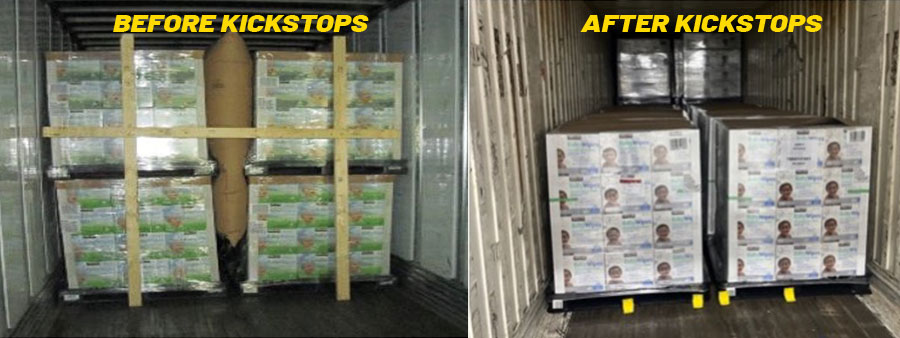
A leading baby wipes manufacturer was shipping high-volume product inbound to a major club wholesaler’s depot. Their dunnage system looked like what you’d see at most facilities: airbags placed between pallets and wood 2x4s suspended inside the trailer to brace the load.
It worked, in the sense that product arrived. But the system had costs that weren’t being tracked as a single number.
At the depot receiving end, every inbound trailer required an operator to stop, step off equipment, cut or deflate airbags, break down wood 2x4s, and dispose of all of it before the freight could move. That process was adding approximately 30 minutes to every trailer unload. At a depot receiving thousands of loads, that labor compounds fast.
And the dunnage itself, the airbags, the cardboard, the wood, had to go somewhere. Disposal costs at club wholesaler depots running high inbound volume reach into the tens of thousands of dollars per month. That cost doesn’t show up on the shipper’s invoice. But it absolutely shows up in the vendor relationship.
The Change
The manufacturer transitioned to KICK STOPS, a cargo restraint device that installs at the base of the pallet row with no tools required and physically prevents pallets from walking in transit without any void-fill material.
No airbags. No wood 2x4s. No cardboard. Nothing to cut, deflate, break down, or dispose of at the receiving end.
The results since full implementation in 2018:
250,000 lbs of dunnage eliminated from inbound trailers annually. That’s the weight of material that no longer has to be manufactured, shipped, installed, removed, and disposed of every year.
30 minutes of unload time saved per trailer. The depot operator stays on the EPJ for the duration of offload. No stopping, no cutting, no disposal process. Thirty minutes back per trailer, across thousands of loads.
Zero dunnage disposal burden at the receiving depot. The material that was generating disposal cost and labor at the receiving end simply doesn’t arrive anymore.
What This Means for Vendor Relationships
The club wholesaler this manufacturer ships into has made waste reduction a stated priority across all vendor partners. They track it. They measure it against vendor scorecards.
Eliminating 250,000 lbs of annual dunnage from inbound loads isn’t just an operational improvement. It’s a win for a vendor compliance. It’s the kind of data point that changes a conversation with a buyer from reactive to strategic.
The manufacturer didn’t just cut costs. They became easier to receive, easier to work with, and aligned with a priority their biggest customer was actively measuring.
That’s the part that doesn’t show up in the dunnage line item.
The Question Worth Asking
If you’re shipping into major retail or club depots, what is your dunnage actually costing your receiving partners and what is that cost doing to your vendor relationship?
Most shippers have never asked that question because the cost isn’t on their invoice. But it’s in the relationship. And in a vendor scorecard world, relationships have metrics.
The math on dunnage looks different when you add up both sides of it.
KICK STOPS is trusted by manufacturers and shippers shipping into Costco, Walmart, and major club and grocery depots across North America. Want to know what your dunnage is costing your receiving partners? Request a cost analysis