
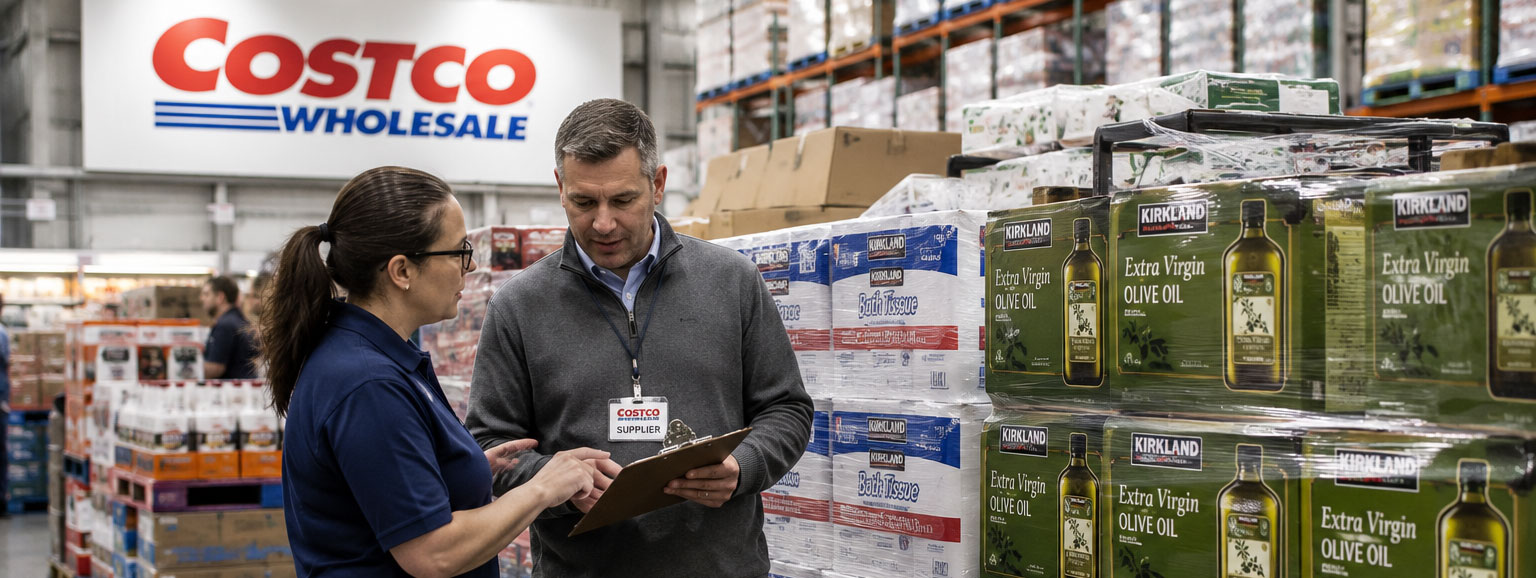
Getting into Costco is hard. Staying in Costco requires consistent execution on every load that ships to their receiving docks. For suppliers, one of the most consequential and least discussed parts of that execution is dunnage.
What Is Dunnage?
Dunnage is any material used to protect and stabilize freight inside a trailer during transit. Traditional dunnage in food and beverage distribution includes airbags, cardboard filler, wood blocking, load bars, and plastic wrap. These materials are placed inside the trailer around or between pallets to prevent shifting during transit.
The type and quality of dunnage a supplier uses directly affects how a load arrives at Costco’s receiving dock.
Why Dunnage Matters More for Costco Suppliers
Costco is one of the most demanding receivers in retail. Their receiving standards are strict and their consequences for non-compliance are significant. Loads that arrive with shifted product, damaged cases, or improperly secured pallets are flagged immediately.
What most suppliers do not fully account for is that dunnage decisions made at the loading dock directly determine whether a load passes or fails at the receiving dock. A supplier who ships to Costco with inadequate dunnage or no formal load pattern is consistently exposing themselves to rejection and chargeback risk on every load.
The Problem With Traditional Dunnage for Costco Lanes
Airbags
Airbags fill space between pallets but do not fix the underlying load design problem. A gap between pallets that is filled with an airbag still has a structural weakness. If the airbag deflates in transit or is not fully inflated, the gap reopens. Airbags also represent a significant cost and disposal burden for Costco’s receiving operations.
Cardboard filler and wood
Single-use materials that go directly to a dumpster or recycling bin at the receiver. For operations with ESG goals or retailer sustainability requirements, the disposal burden of cardboard filler and wood is increasingly scrutinized.
Load bars
Load bars hold pallets in relative position but do not prevent the load from walking in transit. They are also reusable equipment that travels with the carrier and must be returned, adding operational complexity.
How KICK STOPS Addresses Costco Supplier Requirements
KICK STOPS are used by suppliers across multiple categories including consumer goods, food and beverage, and household products. The device addresses the core requirements for Costco lanes:
Load integrity
KICK STOPS are placed at the tail end of the load after every pallet has been bumped tight and the load is unitized. They lock the entire load in place, so product arrives in the same condition as it was loaded.
Sustainability
Every KICK STOPS device is made from 100% US recycled steel. At end of life the devices are recycled and receive scrap credit. This replaces the cardboard, wood, and airbag waste stream that traditional dunnage creates.
Operational simplicity
No inflation equipment. No tools. The loading crew installs and removes KICK STOPS in seconds. No complexity.
Ready to eliminate in transit damage? Request a free load pattern review at kickstops.com. We come to your facility, assess your freight, and build a custom load pattern. No commitment. No sales pitch.
FAQ
What dunnage do Costco suppliers typically use?
Costco suppliers commonly use airbags, cardboard filler, wood blocking, load bars, and stretch film. The type of dunnage a supplier uses directly affects how a load arrives at Costco’s receiving dock and whether it meets Costco’s receiving standards.
Does KICK STOPS meet Costco supplier requirements?
KICK STOPS are used by Costco suppliers across multiple categories. The device locks the entire load in place at the tail end, keeping layer alignment intact and preventing product from shifting in transit. It is made from recycled steel and recyclable at end of life, supporting sustainability requirements.
Why is load design important for Costco suppliers?
Load design determines whether a load can move at all in transit. Loads that arrive at Costco with shifted or leaning product fail receiving standards. Proper load design, with all pallets bumped tight and rows bricked, prevents the conditions that cause shifting before the truck ever leaves the dock.
What is the most common reason Costco suppliers receive chargebacks on freight?
Product that arrives shifted, leaning, or damaged is the most common source of freight chargebacks for Costco suppliers. This almost always traces back to the load pattern and securement at the loading facility. A proper load pattern combined with proper securement prevents this.
How do I find out if KICK STOPS is right for my Costco lanes?
KICK STOPS offers a free load pattern review. We assess your freight, design a custom load pattern, and train your team. Request a free review at kickstops.com.