
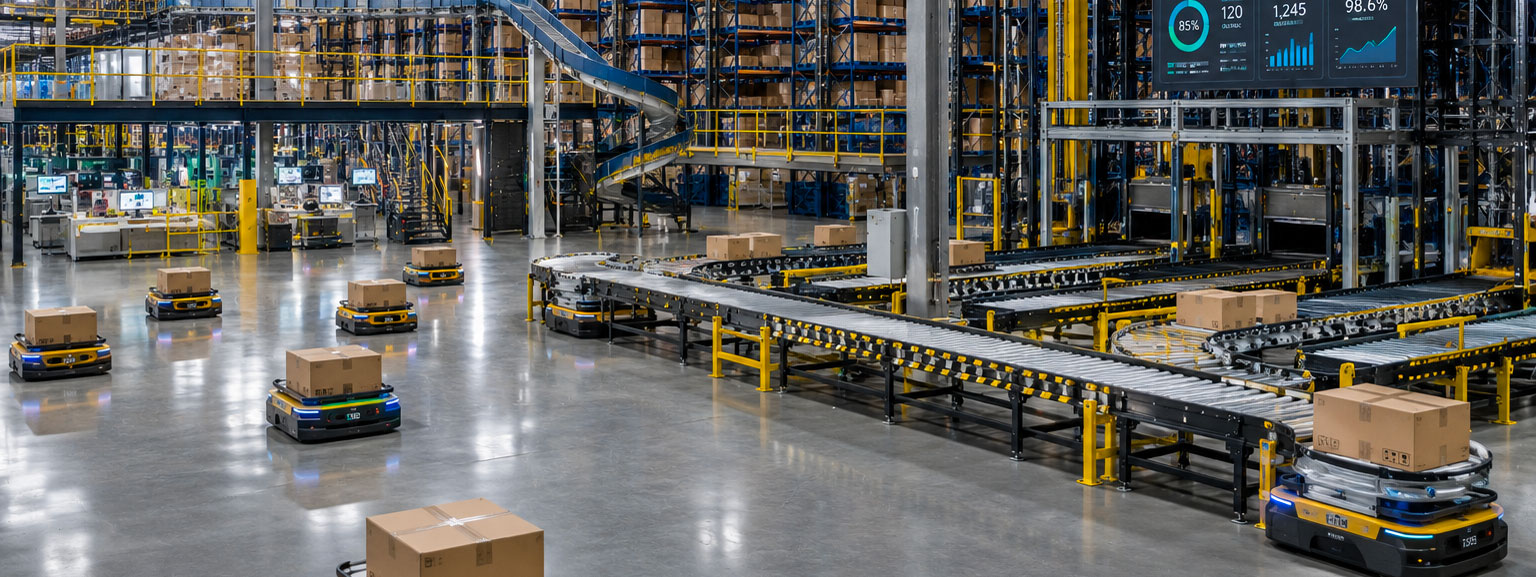
Something has been happening across food and beverage distribution, and it is hard to miss. Major retailers and manufacturers are announcing automated facilities at a pace not seen in years. Robotics, AI-powered fulfillment, machine vision, autonomous vehicles inside the warehouse. The inside of a modern distribution center looks nothing like it did a decade ago.
The investment is real and the results are measurable. Faster pick rates. Fewer errors. Dramatically improved throughput. The technology is working.
And then the trailer doors close.
The smartest building in the supply chain still has to get its freight down the road. That part has not changed.
What happens next, in the hours between when a load leaves a highly automated DC and when it arrives at a receiver, is where we have spent years watching the same problem show up in operation after operation. It does not matter how sophisticated the fulfillment system is. The load still has to survive the lane.
The Gap Between the Warehouse and the Road
Walk through a modern automated DC and the precision is impressive. Every pallet tracked. Every case counted. Inventory accuracy that would have been impossible to achieve manually. The system knows exactly what is on every load before it leaves the building.
Now walk out to the dock.
The trailer is loaded. The doors are closed. And from that moment forward, everything the automated system did so carefully is subject to forces the building cannot control. Braking. Curves. Vibration over hundreds of miles. Rail transfer points on intermodal lanes. The load either holds together or it does not.
Stretch wrap holds pallets together vertically. It does not anchor freight to the trailer floor. A load that is perfectly wrapped can still shift horizontally during transit if there are gaps between pallets and nothing locking the load in place. The wrapping machine does not solve the trailer floor problem.
This is the blind spot. The gap between what the warehouse does brilliantly and what happens after the doors close.Where Damage Actually Starts
We have spent a lot of time on docks and around trailers across food and beverage, CPG, and industrial operations. The same pattern shows up consistently.
A load that looks flawless at the dock can come off the truck leaning, shifted, or collapsed because it had room to move and nothing anchoring it to the floor. By the time anyone sees the damage, the decision that caused it was made at load-out. The gap between pallets was left at origin. The load was built without bricking. Nothing locked the freight in place before the truck moved.
This is not a carrier problem. The carrier did not build the load. It is not a driver problem. In a sealed dry van, the driver cannot see the load and in most cases cannot inspect it without breaking the seal.
It is a loading dock problem. And it shows up as a damage claim, a rejected trailer, a restocking charge, or a vendor scorecard hit at a major retailer.
The load is won or lost on the trailer floor, in the moment the truck brakes and the freight decides whether it stays put or starts to walk.
Not in the sortation system. Not in the software. Not in the stretch wrap station. On the trailer floor, before the truck leaves the dock.
What a Proper Load Actually Requires
The solution is not more dunnage on top of a bad load. It is building the load correctly so there is nothing for dunnage to compensate for.
Step 1: Keep the pallets touching
Gaps between pallets are where every shifted load story starts. Open space creates room for energy to build during transit. That energy becomes movement. Movement becomes damage. The fix starts with bumping every pallet tight so there is nowhere for that energy to go.
Step 2: Brick the load
Bricking means offsetting pallet rows so that the seams between pallets in one row do not align with the seams in the row above or below. A non-bricked load has straight lines of open space running through it. Those lines are where a load fractures under lateral force. A bricked load distributes weight and force across the entire load rather than concentrating it at the seams.
Step 3: Lock the load in place
Even a properly designed load needs securement to hold through the forces of transit. KICK STOPS devices are placed in the load after the pattern has been correctly built. Place. Kick. Secured. No tools. No airbags. No straps. The device grips both the pallet and the trailer floor and the load holds through the entire lane.
KICK STOPS is compatible with wood floor and metal floor trailers. The Metal Floor Device locks into the hat channel for refrigerated and specialty equipment. The same Place. Kick. Secured. installation works on both.
The Question Worth Asking
For any operation that has invested in automation, we would put this question forward as a genuine one rather than a criticism.
You have made the inside of your building faster and smarter than ever. Have you given the same attention to the gap between your freight and the trailer floor?
The automation revolution has been remarkable to watch. The next frontier may not be another conveyor or another algorithm. It may be the least glamorous, most physical part of the whole operation. Anchoring the freight so that everything the building did so well actually survives the trip.
The industry has invested significantly in what happens before the trailer doors close. The moment after those doors close deserves the same attention.
Ready to close the gap between your DC and your trailer floor? Request a free load pattern review at kickstops.com. We come to your facility, assess your freight, and build a custom load pattern for your specific operation. No commitment. No sales pitch.
Key Takeaways
- Automated DCs have transformed what happens inside the warehouse. The trailer floor remains the blind spot most operations have not addressed.
- Stretch wrap holds pallets together vertically. It does not anchor freight to the trailer floor or prevent horizontal shifting during transit.
- Gaps between pallets are the root cause of most in transit freight damage. Eliminating gaps through proper load design is the first step.
- Bricking the load eliminates straight lines of open space that allow loads to fracture under lateral force.
- KICK STOPS physically anchors the load to the trailer floor after the load pattern has been correctly built. No tools. No airbags. No straps.
- The load is won or lost on the trailer floor, before the truck ever leaves the dock.
Frequently Asked Questions
What is the automation blind spot in distribution center operations?
The automation blind spot is what happens after the trailer doors close. Modern DCs have invested heavily in robotics, AI, and automated fulfillment inside the building. But the load still has to survive transit. Stretch wrap, the final step in most automated packing lines, holds pallets together vertically but does not anchor freight to the trailer floor or prevent shifting during transit. That gap between the warehouse and the road is where most in transit damage originates.
Why does freight still shift in transit even when pallets are stretch wrapped?
Stretch wrap holds cases to a pallet vertically. It does not anchor the pallet to the trailer floor or prevent the pallet from sliding horizontally during transit. When there are gaps between pallets in the trailer and nothing locking the load in place, the load has room to move under braking, cornering, or the vibration of a long intermodal run. Stretch wrap alone does not solve the trailer floor problem.
What is bricking a load and why does it matter?
Bricking means offsetting pallet rows so the seams between pallets in one row do not align with the seams in adjacent rows. A non-bricked load has straight lines of open space running through it that concentrate force at the seams during transit. A bricked load distributes force across the entire load and eliminates the lines where a load fractures under lateral movement.
How does KICK STOPS work in an automated distribution center environment?
KICK STOPS is placed in the load after it has been built and before the trailer doors close. The device does not require any changes to the automated fulfillment process. It is placed by a dock worker at the tail end of the load or throughout the load as needed. One firm step drives the device’s teeth into both the pallet and the trailer floor, locking the entire load in place. No tools, no airbags, no straps. The forklift removes the devices at the receiver as part of normal unloading.
Does KICK STOPS work on both wood floor and metal floor trailers?
Yes. KICK STOPS is available in two versions. The Wood Floor Device works on standard dry van trailers and intermodal containers with wood plank floors. The Metal Floor Device locks into the hat channel of metal trailer floors including refrigerated trailers and temperature-controlled equipment. Both use the same Place. Kick. Secured. installation with no tools required.
What is the most common cause of in transit freight damage in food and beverage distribution?
Gaps between pallets. When pallets are not bumped tight inside the trailer, open space exists where energy can build during transit. Under braking, cornering, or vibration on a long intermodal run, that energy becomes movement and movement becomes damage. Eliminating gaps through proper load design and bricking is the foundation of preventing in transit damage.
KICK STOPS: The most cost-effective, time-saving, and sustainable freight securement system in the industry. Learn more or request a demo at kickstops.com